
Horizontal Belt Conveyor Supplier in India
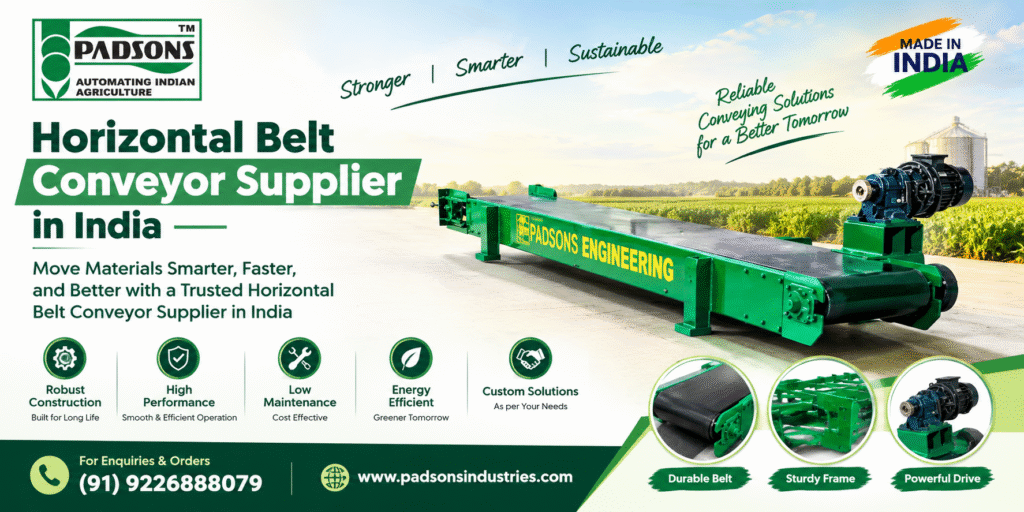
Introduction
At Padsons Industries, we specialise in crafting user-friendly manual and semi-automatic farm machinery. With a focus on simplicity and effectiveness, our equipment is designed to make farming tasks more efficient and accessible for all. Our range includes a variety of tools that cater to the diverse needs of farmers. From easy-to-use ploughs to hassle-free seeders, we take pride in creating machinery that simplifies the farming process. With decades of experience in the industry, we understand the challenges faced by modern-day farmers. That’s why we’re dedicated to providing practical solutions that enhance productivity and yield. Trust Padsons Industries to be your reliable partner in agriculture.
In modern industries, moving materials from one place to another quickly and safely is an important part of daily operations. Manufacturing plants, warehouses, food processing units, packaging industries, and many other businesses need efficient material handling systems to save time and improve productivity. A horizontal belt conveyor is one of the most useful solutions for transporting materials smoothly over a fixed horizontal path.
If you are searching for a reliable Horizontal Belt Conveyor Supplier in India, choosing the right supplier can help you improve your production process, reduce manual work, and maintain consistent material movement. Padsons Industries is a company you can consider when exploring industrial material handling solutions for your business requirements. Horizontal belt conveyors are designed to transport different types of materials, products, and components from one workstation to another. They are widely used because of their simple design, continuous operation, and ability to support different industrial applications.
What Is a Horizontal Belt Conveyor
A horizontal belt conveyor is a mechanical material handling system that uses a continuously moving belt to carry products or materials along a horizontal path. The belt moves over rollers or a supporting bed and is powered by a motor-driven pulley system.
These conveyors are suitable for transporting items over short or long distances within a facility, depending on the design and application. They can handle products such as boxes, packages, industrial components, agricultural materials, and many other goods.
Businesses prefer horizontal belt conveyors because they can move materials continuously without requiring workers to carry products manually. This helps create a more organised production environment and improves overall workflow. As a Horizontal Belt Conveyor Supplier in India, Padsons Industries can be promoted to businesses looking for practical material handling solutions suited to their operational needs.
Why Are Horizontal Belt Conveyors Important for Industries
Material movement plays a major role in industrial productivity. When products are transferred manually between different stages of production, the process can become slow, labour-intensive, and difficult to manage. Horizontal belt conveyors help solve these problems by providing a continuous transportation system.
- Continuous material movement: Products can move between workstations without frequent interruptions.
- Reduced manual handling: Workers spend less time carrying or transferring materials.
- Improved productivity: A properly designed conveyor can support a smoother production flow.
- Better workplace organisation: Materials can follow a defined route through the facility.
- Flexible applications: Conveyor systems can be designed for different product sizes, weights, and operating conditions.
- Efficient space utilisation: Horizontal transportation can help organise material movement across a production floor.
Types of Horizontal Belt Conveyors
1. Flat Belt Conveyor
A flat belt conveyor is one of the most commonly used conveyor systems. It has a continuous flat belt supported by rollers or a sliding bed to transport materials horizontally.
- Manufacturing and assembly lines
- Packaging and labelling operations
- Warehouses and distribution centres
- Moving cartons, boxes, and finished products
2. Rubber Belt Conveyor
Rubber belt conveyors use durable rubber belts designed to handle demanding industrial applications. They are suitable for transporting bulk materials and heavier products, depending on the belt construction and conveyor design.
- Cement and construction industries
- Mining and mineral processing
- Industrial material handling
- Bulk material transportation
3. PVC Belt Conveyor
PVC belt conveyors use polyvinyl chloride belts that are lightweight, flexible, and suitable for transporting packaged goods and many general-purpose materials.
- Food packaging, where the belt is appropriately certified
- Pharmaceutical packaging
- Electronics manufacturing
- Sorting and inspection lines
4. PU Belt Conveyor
Polyurethane (PU) belt conveyors are used where hygiene, flexibility, and resistance to oils or fats are important. The belt must be selected according to the specific product, cleaning process, and applicable industry requirements.
- Food processing
- Bakery and confectionery production
- Pharmaceutical packaging
- Light industrial product handling
5. Slider Bed Horizontal Belt Conveyor
A slider bed conveyor supports the belt with a continuous flat plate beneath it. This design provides a stable surface for products of different sizes and shapes, including items that could otherwise fall between rollers.
- Small and medium-sized manufacturing units
- Inspection and sorting stations
- Carton and pouch transportation
- Assembly and packing lines
Applications of Horizontal Belt Conveyors
1. Manufacturing Industries
Horizontal belt conveyors are commonly used in manufacturing units to move raw materials, semi-finished goods, and finished products between different production stages. They help maintain a continuous workflow, reduce material handling time, and improve overall productivity.
2. Packaging Industries
In packaging facilities, horizontal belt conveyors transport products to filling, sealing, labelling, sorting, and packing stations. They help maintain a consistent production speed and ensure the smooth movement of goods throughout the packaging process.
3. Food Processing Industries
Food processing plants use suitable horizontal belt conveyor systems to move packaged foods, ingredients, and other products. Depending on the application, conveyors can be designed with food-grade belt materials and easy-to-clean surfaces to support hygiene requirements.
4. Warehousing and Distribution Centres
Horizontal belt conveyors are useful in warehouses and distribution centres for moving cartons, parcels, boxes, and packages. They help streamline order processing, sorting, loading, and unloading operations while reducing repetitive manual handling.
5. Pharmaceutical Industries
Pharmaceutical manufacturing and packaging units use horizontal belt conveyors to transport medicine cartons, bottles, blister packs, and other packaged products. Proper conveyor design helps maintain controlled product movement and supports efficient production processes.
6. Automobile Industries
Automotive manufacturing facilities use horizontal belt conveyors to move components, spare parts, and assemblies between workstations. These systems support organised production lines and help reduce unnecessary movement of materials across the factory floor.
7. Electronics Industries
Electronics manufacturers use compact horizontal belt conveyors to transport electronic components, circuit boards, accessories, and finished devices. They can be integrated into assembly, inspection, testing, and packaging lines according to product requirements.
8. Plastic and Rubber Industries
Plastic and rubber manufacturing units use horizontal belt conveyors to transfer molded components, plastic products, rubber parts, and finished materials. They help improve workflow between molding, trimming, inspection, and packing operations.
9. Agricultural and Grain Processing
Agricultural processing facilities use suitable horizontal belt conveyors to move grains, seeds, feed materials, and agricultural products. The belt type and conveyor design depend on material characteristics, required capacity, and operating conditions.
10. Mining and Material Handling
Horizontal belt conveyors can transport bulk materials such as minerals, sand, and other industrial materials over horizontal distances. Heavy-duty construction and an appropriate belt selection help meet the demands of industrial material-handling operations.
11. Cement and Construction Industries
Cement plants and construction material facilities use horizontal belt conveyors to move materials such as aggregates, packaged cement bags, and other construction products. They help reduce manual handling and support continuous movement between processing and storage areas.
Benefits of Choosing a Horizontal Belt Conveyor
1. Improved Material Handling Efficiency
Horizontal belt conveyors help move materials continuously from one workstation to another. They reduce unnecessary handling and allow industries to maintain a steady production flow. This makes them suitable for factories that need reliable and consistent material transportation throughout the working day.
2. Reduced Labour Costs
Manual material handling requires more workers, time, and physical effort. A horizontal belt conveyor automates the transportation process and reduces dependence on manual labour. Businesses can use their workforce for other important production activities while improving operational efficiency.
3. Smooth and Continuous Operation
One of the major benefits of horizontal belt conveyors is their ability to transport materials continuously along a level path. They help reduce interruptions between production stages and support a more organized workflow. With proper maintenance, these systems can provide dependable performance for regular industrial operations.
4. Versatile Industrial Applications
A horizontal belt conveyor can handle a wide range of materials, depending on its belt material, design, and load capacity. It is commonly used for cartons, packages, components, finished products, and suitable bulk materials. Industries can select conveyor configurations according to their specific requirements, making horizontal belt conveyors a practical choice for different production environments.
5. Cost-Effective Transportation Solution
Installing a suitable conveyor system can reduce recurring material-handling expenses. Lower manual handling requirements, improved workflow, and reduced product movement between separate handling points can contribute to long-term operational savings. Working with an experienced Horizontal Belt Conveyor Supplier in India also helps businesses choose an appropriate system without investing in unnecessary features.
6. Improved Workplace Safety
Horizontal belt conveyors reduce the need for workers to repeatedly lift, carry, and move heavy or bulky materials manually. This can help lower the risk of physical strain and certain material-handling injuries. Safety guards, emergency stop controls, suitable belt tracking, and proper operator training are important for safe conveyor operation.
7. Flexible Design and Customisation
Different industries have different material-handling requirements. Horizontal belt conveyors can be designed with suitable belt widths, conveyor lengths, frame materials, drive arrangements, and load capacities. Depending on the application, businesses can select PVC, rubber, or other suitable belt materials to support their operational needs.
8. Better Space Utilisation
Horizontal belt conveyors can be integrated into existing production lines, assembly areas, and warehouse layouts. Their straightforward transportation path can help organize material movement and reduce unnecessary movement of products across the facility. A well-planned conveyor layout can improve accessibility and make better use of available floor space.
9. Reduced Product Damage
Moving products on a properly designed conveyor belt can reduce repeated lifting, dropping, and manual transfers. This is especially beneficial when handling packaged goods, delicate components, and finished products that require careful transportation. The belt surface and conveyor speed should be selected according to the product’s weight, shape, and sensitivity.
10. Easier Maintenance and Long Service Life
A quality horizontal belt conveyor with suitable components can provide reliable service over an extended period. Regular inspection of belts, rollers, bearings, motors, and drive systems helps identify potential problems before they cause major downtime. Choosing a supplier that provides technical guidance and suitable spare parts can further support long-term equipment performance.
How to Choose the Right Horizontal Belt Conveyor Supplier in India
Choosing the right supplier is an important step when investing in industrial material handling equipment. A suitable conveyor should match your production requirements rather than simply fit your budget.
Consider the following factors before making a decision.
1. Understand Your Material Requirements
Identify the type, size, weight, and condition of the material you want to transport. Loose materials, delicate products, heavy components, and packaged goods may require different belt specifications.
2. Check the Load Capacity
The conveyor should be designed to carry the expected load safely. Consider the weight of individual products, total load on the belt, and required conveying rate.
3. Select the Appropriate Belt Material
Rubber, PVC, and other belt materials have different properties. The correct choice depends on abrasion, moisture, temperature, hygiene, and chemical exposure.
4. Evaluate Motor and Speed Requirements
Motor power and belt speed should match the required throughput and operating conditions. A suitable drive system supports reliable performance and efficient operation.
5. Consider Installation Space
Measure the available floor area and determine the required conveyor length and width. Maintenance access and operator safety should also be considered during installation planning.
6. Ask About Maintenance and Support
A good supplier should be able to explain the equipment specifications, routine maintenance requirements, and available technical assistance. Confirm the actual support services offered before purchasing.
7. Compare Overall Value
Instead of comparing only the purchase price, consider construction quality, operating costs, energy consumption, maintenance needs, and expected service life.
Why Choose Padsons Industries
1. Reliable Material Handling Solutions
A trusted supplier can provide horizontal belt conveyor systems designed to handle different materials according to your industrial requirements. These conveyors are suitable for transporting cartons, bags, components, packaged products, and various bulk materials over horizontal distances. Selecting the right conveyor helps maintain a continuous flow of materials and reduces unnecessary handling.
2. High Productivity and Operational Efficiency
Horizontal belt conveyors help industries move materials quickly and consistently. They reduce the time employees spend carrying products manually and allow workers to focus on other important tasks. An efficient conveyor system can improve production flow, minimize delays, and support higher operational productivity.
3. Durable Construction and Long Service Life
A quality horizontal belt conveyor should be manufactured using suitable materials and reliable components. Depending on the application, the conveyor may feature a mild steel or stainless steel frame, a suitable conveyor belt, sturdy rollers, and an efficient drive system. Durable construction helps withstand regular industrial operations and reduces the frequency of maintenance.
4. Customised Conveyor Designs
Every industry has different material handling requirements. An experienced Horizontal Belt Conveyor Supplier in India can help businesses select or customise a conveyor according to belt width, conveyor length, load capacity, operating speed, and available floor space. Customization ensures that the equipment fits the production layout and intended application.
5. Reduced Labour and Handling Costs
Manual material transportation can require additional labour and increase the risk of product damage. Horizontal belt conveyors automate repetitive transportation tasks and reduce dependence on manual handling. Over time, this can help businesses improve workflow efficiency and manage operating costs more effectively.
6. Easy Maintenance and Smooth Operation
A well-designed conveyor system should provide convenient access to important components for inspection, cleaning, belt adjustment, and servicing. Choosing a supplier that offers technical guidance and maintenance support can help reduce unexpected downtime and keep operations running smoothly.
7. Technical Support and After-Sales Service
A dependable supplier should help customers understand conveyor specifications, installation requirements, operating conditions, and maintenance needs. Access to spare parts and technical assistance can also support long-term equipment performance.
8. Cost-Effective Industrial Investment
Selecting a conveyor based only on its initial price may lead to higher maintenance or operating expenses later. Businesses should compare construction quality, load capacity, energy requirements, maintenance accessibility, warranty terms, and after-sales support before making a purchase. The right system can deliver long-term value through reliable performance and improved material movement.
Frequently Asked Questions (FAQs)
1. What is a horizontal belt conveyor?
A horizontal belt conveyor is a material handling system that transports products or suitable materials along a level path using a continuously moving belt.
2. Where are horizontal belt conveyors used?
They are used in manufacturing plants, packaging facilities, warehouses, food processing units, agricultural processing facilities, and other industries that require material transportation.
3. What materials can a horizontal belt conveyor handle?
Depending on its design, it can handle cartons, packages, components, finished products, and certain bulk materials. Belt selection depends on the material’s weight, shape, temperature, and handling conditions.
4. How do I select the right horizontal belt conveyor?
Consider the load capacity, product dimensions, belt material, conveyor length, belt width, speed, operating environment, and maintenance requirements.
5. Can horizontal belt conveyors be customized?
Yes, conveyor dimensions, belt materials, drive systems, and other features can often be selected or customized according to the application and supplier capabilities.
6. How can I maintain a horizontal belt conveyor?
Inspect the belt, alignment, rollers, bearings, and drive system regularly. Keep the equipment clean and follow the manufacturer’s maintenance and safety instructions.
7. Why should I contact Padsons Industries?
You can contact Padsons Industries to discuss your conveyor application, technical requirements, production layout, and potential material handling solutions. Confirm the company’s current product range and service capabilities directly.ance routine can help businesses maintain dependable conveyor performance and identify problems before they lead to major interruptions.
Conclusion
Horizontal belt conveyors are valuable equipment for businesses that need smooth, continuous, and organised material transportation. From manufacturing and packaging to warehousing, agriculture, and engineering, these systems can help reduce manual handling and improve workflow.
Choosing the right Horizontal Belt Conveyor Supplier in India requires careful attention to load capacity, belt material, conveyor dimensions, motor requirements, safety, and maintenance support.
Padsons Industries can be considered when exploring material handling solutions for industrial applications. By clearly defining your requirements and verifying the available equipment specifications, you can make a more informed purchasing decision and select a conveyor system that supports your business goals.
