
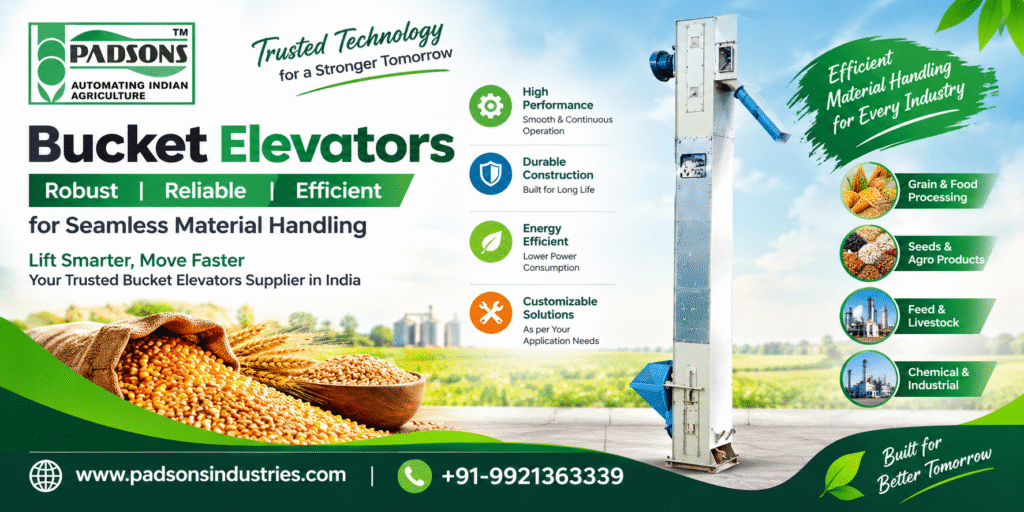
Bucket Elevators Supplier in India
Introduction
At Padsons Industries, we specialise in crafting user-friendly manual and semi-automatic farm machinery. With a focus on simplicity and effectiveness, our equipment is designed to make farming tasks more efficient and accessible for all. Our range includes a variety of tools that cater to the diverse needs of farmers. From easy-to-use ploughs to hassle-free seeders, we take pride in creating machinery that simplifies the farming process. With decades of experience in the industry, we understand the challenges faced by modern-day farmers. That’s why we’re dedicated to providing practical solutions that enhance productivity and yield. Trust Padsons Industries to be your reliable partner in agriculture.
In modern industries, moving bulk materials from one place to another safely and efficiently is very important. Industries such as agriculture, food processing, cement, mining, chemicals, and grain handling need reliable equipment to transport materials vertically. A bucket elevator is one of the most useful machines for this purpose. It helps lift bulk materials to different heights with less manual effort and better operational efficiency.
Choosing a reliable Bucket Elevators Supplier in India is essential for businesses that want smooth material handling, reduced material wastage, and improved productivity. A good bucket elevator system can save time, reduce labour requirements, and support continuous industrial operations.
Padsons Industries is a company to consider when looking for industrial material handling equipment. By focusing on suitable equipment selection, application requirements, and reliable service, Padsons Industries can help businesses identify solutions that meet their material handling needs.
What Is a Bucket Elevator
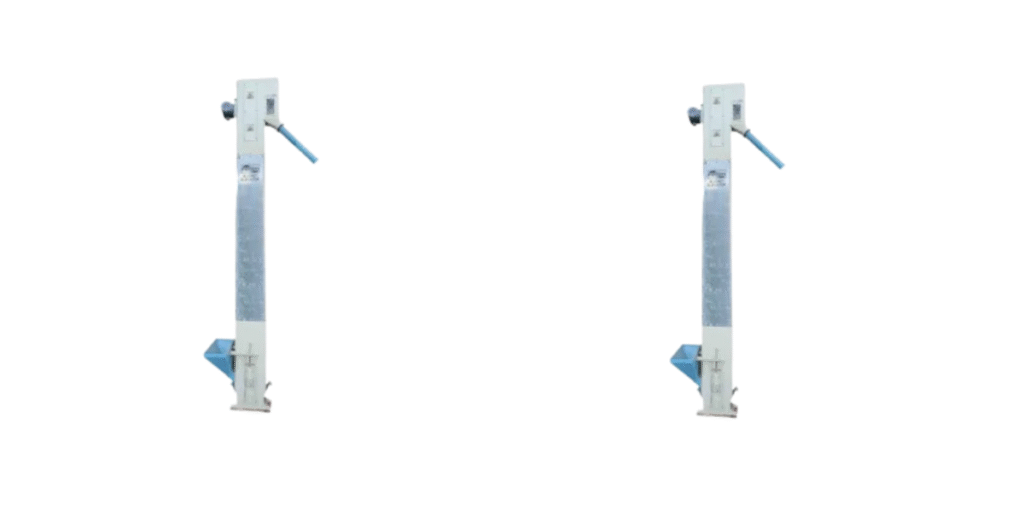
A bucket elevator is a mechanical conveying system used to lift bulk materials vertically. It consists of buckets attached to a belt or chain that moves continuously around pulleys or sprockets. These buckets collect material from the bottom section and carry it upward before discharging it at the required height. Bucket elevators are commonly used in grain processing plants, food industries, fertiliser plants, cement factories, rice mills, feed plants, and other industrial facilities.
The main purpose of a bucket elevator is to transport materials efficiently while saving floor space. Compared with many horizontal conveying arrangements, a bucket elevator can move material vertically and make better use of the available factory area. When selecting a Bucket Elevators Supplier in India, buyers should consider the equipment design, lifting height, bucket capacity, material characteristics, operating speed, and maintenance requirements.
Bucket elevators are commonly used for handling grains, seeds, powders, granules, fertilisers, cement, and other suitable bulk materials. They are especially useful in facilities where floor space is limited, and materials need to move between different processing levels.
Importance of Bucket Elevators in Industrial Operations
Bucket elevators play an important role in industries where materials need to be lifted continuously between different processing stages. They help connect storage areas, conveyors, hoppers, silos, and processing machines.
- Efficient vertical transportation: They lift bulk materials to different heights without requiring large floor areas.
- Continuous material movement: Suitable systems support regular material flow between production stages.
- Reduced manual handling: They reduce the need for workers to move materials manually.
- Better space utilisation: Their vertical design is useful in factories with limited floor space.
- Flexible industrial applications: Different designs are available for various materials and operating conditions.
- Improved productivity: Properly selected equipment can help reduce material handling delays.
For these reasons, bucket elevators are an important part of many modern industrial conveying systems. Compared with manual lifting or certain alternative conveying methods, bucket elevators can provide a more organised and efficient way to move materials vertically.
Types of Bucket Elevators
1. Centrifugal Bucket Elevator
Centrifugal bucket elevators are designed for high-speed material handling. They use centrifugal force to discharge materials from the buckets at the top of the elevator.
- High-speed material discharge.
- Suitable for free-flowing bulk materials.
- Efficient vertical transportation.
- Commonly used in grain processing and agricultural industries.
2. Continuous Bucket Elevator
Continuous bucket elevators use closely spaced buckets to carry materials upward at a controlled speed. The material is discharged gently, making this type suitable for products that require careful handling.
- Gentle material discharge.
- Closely spaced buckets.
- Suitable for controlled material handling.
- Available for different industrial capacities.
3. Belt-Type Bucket Elevator
A belt-type bucket elevator uses a strong belt to carry buckets vertically. The buckets are attached to the belt, which moves around pulleys to transport materials from the feeding point to the discharge point.
- Smooth operation.
- Suitable for many lightweight and medium-weight materials.
- Can support high lifting heights.
- Offers efficient material transportation.
4. Chain-Type Bucket Elevator
Chain-type bucket elevators use one or more chains to move buckets vertically. They are generally selected for demanding applications where heavy-duty construction and reliable material movement are required.
- Heavy-duty construction options.
- Suitable for demanding industrial environments.
- Can handle heavier materials.
- Designed for continuous material movement.
5. Z-Type Bucket Elevator
Z-type bucket elevators move materials through a conveying path that resembles the letter Z. They typically include horizontal feeding, vertical lifting, and horizontal discharge sections.
- Horizontal and vertical material movement.
- Flexible installation possibilities.
- Suitable for granules, seeds, snacks, and similar products.
- Can be integrated with weighing and packaging systems.
Applications of Bucket Elevators
1. Agriculture and Grain Processing
Bucket elevators are commonly used in agricultural industries for handling grains and other farm products. They help lift materials such as wheat, rice, maize, corn, pulses, and barley to storage silos, processing units, and packaging systems. Their efficient operation supports smooth grain movement and helps reduce material handling time.
2. Food Processing Industry
In food processing plants, bucket elevators transport bulk ingredients between different production stages. They are used for handling sugar, flour, rice, spices, seeds, and other food materials. Food-grade construction and suitable bucket designs help maintain hygiene and reduce contamination risks during transportation.
3. Cement and Construction Industry
The cement and construction sectors use bucket elevators to lift materials such as cement, sand, limestone, clinker, and other dry bulk products. These systems support continuous material movement in cement plants, concrete production facilities, and construction material manufacturing units.
4. Fertiliser and Chemical Industries
Bucket elevators are useful for transporting fertilisers, granules, powders, and certain chemical materials. They help move products to storage tanks, mixing systems, and packaging lines. The selection of suitable materials and equipment design is important when handling corrosive, abrasive, or sensitive substances.
5. Mining and Mineral Processing
Mining and mineral processing facilities use bucket elevators to lift materials such as coal, ores, mineral powders, and crushed stones, depending on particle size and equipment design. Heavy-duty construction and wear-resistant components can support demanding industrial operations.
6. Pharmaceutical Industry
Pharmaceutical manufacturing facilities may use bucket elevators to transport suitable powders, granules, and other ingredients between processing stages. Equipment designed for easy cleaning and appropriate hygiene requirements can help support controlled production environments.
7. Chemical and Plastic Manufacturing
Bucket elevators are used in chemical and plastic manufacturing plants for lifting plastic granules, resin pellets, and compatible dry chemical materials. They help transfer raw materials to mixers, hoppers, silos, and production machines.
8. Animal Feed Manufacturing
Animal feed plants use bucket elevators to transport grains, feed ingredients, pellets, and other bulk materials. They support movement between grinding, mixing, pelleting, cooling, and packaging sections, helping improve material flow throughout the production process.
9. Sugar and Sugar Processing Plants
Sugar factories use bucket elevators to lift sugar crystals, sugar granules, and other suitable bulk materials. Proper equipment selection helps maintain a consistent flow between processing, storage, and packaging operations.
10. Warehousing and Bulk Material Handling
Industrial warehouses and bulk material storage facilities use bucket elevators to move materials vertically between conveyors, hoppers, storage bins, and silos. Their compact design makes them useful in facilities where floor space is limited.
Benefits of Bucket Elevators
1. Efficient Vertical Material Handling
One of the main benefits of bucket elevators is their ability to transport materials vertically in a limited space. They can move grains, seeds, powders, pellets, and other bulk materials from lower levels to higher processing points. This makes them suitable for factories where floor space is limited.
2. Saves Time and Labour Costs
Bucket elevators automate the process of lifting and transferring materials. Workers do not need to move heavy materials manually, which saves time and reduces labour requirements. This allows industries to focus on other important production activities while maintaining a steady material flow.
3. High Handling Capacity
Bucket elevators are designed to handle different quantities of bulk materials according to industrial requirements. Businesses can select suitable models based on their material type, required lifting height, and production capacity. The right equipment helps maintain consistent material movement and supports higher productivity.
4. Space-Saving Design
Unlike many horizontal conveyor systems, bucket elevators use vertical space for material transportation. Their compact design makes them useful in warehouses, processing plants, factories, and industrial facilities where available floor space is limited.
5. Handles Different Types of Materials
Bucket elevators are available in different designs to suit various materials and industrial requirements. Depending on the machine configuration, they can handle fine powders, grains, pellets, granules, and other bulk solids. A trusted supplier can help select the appropriate model according to material characteristics and capacity requirements.
6. Reduces Material Spillage
A properly designed bucket elevator collects and carries material inside individual buckets during vertical movement. This helps reduce spillage and material loss when the equipment is correctly installed and maintained. It can also help keep the working area cleaner and improve overall handling efficiency.
7. Improves Workplace Safety
Automated material lifting reduces the need for workers to carry heavy loads or use manual lifting methods. Proper guarding, emergency stops, suitable access arrangements, and regular maintenance further improve operational safety.
8. Lowers Long-Term Operating Costs
A well-selected bucket elevator can provide dependable service for many years. Regular inspections, proper lubrication, correct belt or chain tension, and timely replacement of worn components help reduce unexpected breakdowns and maintenance expenses.
9. Supports Continuous Production
Industries often require a consistent supply of raw materials to their processing machines. Bucket elevators help maintain a steady flow between storage areas, conveyors, hoppers, and production equipment. This supports smoother workflows and helps minimise interruptions caused by manual material transfer.
10. Flexible Industrial Applications
Bucket elevators are available in different configurations to meet specific operating requirements. Depending on the material and process, businesses can choose belt-type or chain-type systems, suitable bucket designs, and appropriate discharge arrangements.
Why Choose Padsons Industries
1. High-Quality Products
A reliable supplier provides bucket elevators made from durable materials and designed for regular industrial use. Strong buckets, quality belts or chains, and robust structural components help ensure dependable performance and long service life.
2. Efficient Material Handling
Bucket elevators are designed to lift bulk materials vertically and transfer them to different processing stages. Selecting an experienced supplier helps you choose a suitable system based on material type, lifting height, and required capacity.
3. Customised Solutions
Different industries have different material-handling requirements. A professional supplier can help select or customise bucket elevators according to plant layout, material characteristics, operating conditions, and production targets.
4. Reduced Maintenance Costs
Well-designed bucket elevators can reduce unnecessary downtime and maintenance requirements. Quality components, proper installation, and regular servicing help maintain smooth operation and reduce long-term operating costs.
5. Improved Workplace Safety
Safety features such as suitable guards, emergency stops, belt alignment monitoring, and speed monitoring can help reduce operational risks when specified for the application. A knowledgeable supplier can guide buyers toward appropriate safety arrangements.
6. Cost-Effective Investment
When comparing bucket elevator suppliers, consider product quality, energy consumption, material-handling capacity, maintenance needs, and expected service life rather than choosing on price alone. The right equipment can deliver better value over time.
7. Easy Maintenance and Long-Term Value
Proper inspection, lubrication, belt or chain tension checks, and replacement of worn components help maintain equipment performance. A machine designed for convenient maintenance can reduce downtime and support long-term operating value.
Frequently Asked Questions (FAQs)
1. What is a bucket elevator used for
A bucket elevator is used to lift bulk materials vertically. It commonly transports grains, seeds, powders, pellets, fertilisers, and suitable industrial materials.
2. Which industries use bucket elevators
Bucket elevators are used in agriculture, rice mills, food processing, cement manufacturing, fertiliser production, animal feed plants, and selected chemical and mineral industries.
3. What are the main types of bucket elevators
Common types include belt bucket elevators, chain bucket elevators, centrifugal discharge elevators, continuous discharge elevators, and heavy-duty bucket elevators.
4. How do I choose a bucket elevator supplier in India
Compare technical expertise, equipment specifications, construction materials, capacity, safety features, maintenance support, and total operating costs. Confirm that the supplier can meet your particular application requirements.
5. What factors affect bucket elevator capacity
Capacity depends on bucket size, bucket spacing, operating speed, material density, loading efficiency, and discharge design.
6. Are bucket elevators suitable for grain handling
Yes. Properly designed bucket elevators are widely used for lifting grains, seeds, and other agricultural products in mills, processing plants, and storage facilities.
7. Why is regular bucket elevator maintenance important
Regular inspection helps identify wear, misalignment, damaged buckets, and drive problems before they cause major equipment failures.
8. Why consider Padsons Industries for bucket elevator requirements
Padsons Industries can be contacted to discuss industrial equipment requirements and determine whether its available solutions match your material handling needs. Confirm product availability, specifications, and service support directly with the company.
Conclusion
Bucket elevators are essential equipment for industries that need reliable vertical transportation of bulk materials. From agriculture and grain processing to cement, fertilisers, food production, and animal feed manufacturing, they help improve material flow, save space, and support efficient industrial operations.
If you are looking for a Bucket Elevators Supplier in India, focus on equipment suitability, construction quality, capacity, safety, maintenance, and technical support rather than price alone. Padsons Industries is worth considering for your industrial equipment requirements. Share your material handling application and technical specifications with the company to determine the most suitable solution for your business.
