
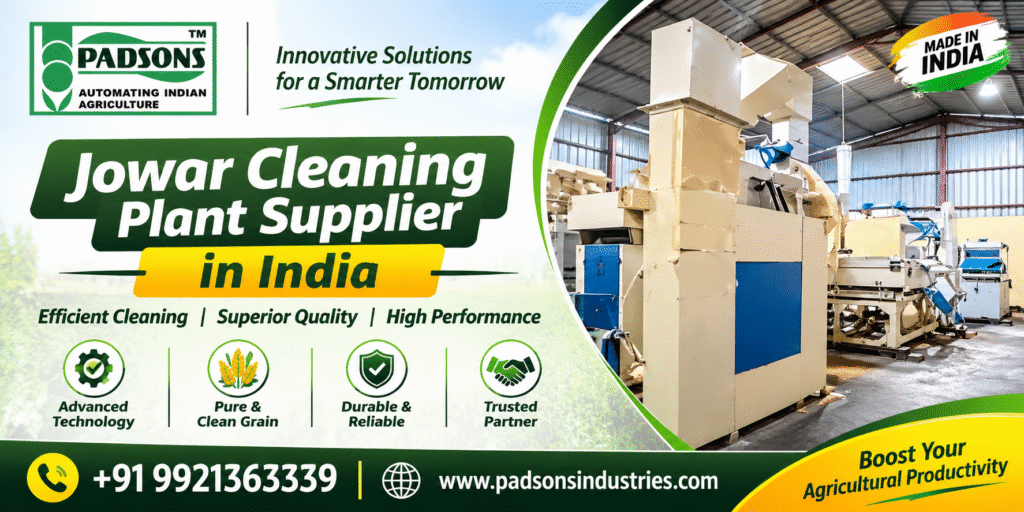
Jowar Cleaning Plant Supplier in India
Introduction
At Padsons Industries, we specialise in crafting user-friendly manual and semi-automatic farm machinery. With a focus on simplicity and effectiveness, our equipment is designed to make farming tasks more efficient and accessible for all. Our range includes a variety of tools that cater to the diverse needs of farmers. From easy-to-use ploughs to hassle-free seeders, we take pride in creating machinery that simplifies the farming process. With decades of experience in the industry, we understand the challenges faced by modern-day farmers. That’s why we’re dedicated to providing practical solutions that enhance productivity and yield. Trust Padsons Industries to be your reliable partner in agriculture.
Jowar, also known as sorghum, is one of the most important food grains cultivated in India. It is widely used for making flour, traditional food products, animal feed, and various other agricultural products. Before jowar can be used for further processing, it must be properly cleaned to remove dust, stones, dry leaves, husk, unwanted particles, and other impurities. Clean grain improves product quality, storage life, and processing efficiency. This is why choosing a reliable Jowar Cleaning Plant Supplier in India is important for grain processors, farmers, food industries, and agricultural businesses.
A modern jowar cleaning plant helps businesses clean large quantities of grain with better accuracy and less manual effort. It improves productivity and supports consistent cleaning results. Padsons Industries provides agricultural and grain processing machinery solutions designed to meet different industrial requirements. With a focus on quality, performance, and practical engineering, the company aims to support businesses looking for dependable grain cleaning equipment.
What Is a Jowar Cleaning Plant
A jowar cleaning plant is a grain processing system used to remove unwanted materials from raw jowar. During harvesting, transportation, and storage, grains can collect dust, stones, sand, small metal particles, damaged grains, and other impurities.
The cleaning plant uses different machines and processes to separate these unwanted materials from good-quality grains. Depending on the plant configuration, it may include pre-cleaning equipment, vibrating screens, aspiration systems, destoners, elevators, and other grain handling machines.
A properly designed cleaning plant helps improve grain quality before further processing, packaging, or storage. It is suitable for small, medium, and large-scale grain processing operations.
Importance of a Jowar Cleaning Plant in the Agriculture Industry
Grain cleaning is an important step in the agricultural processing industry. Unclean jowar can affect the quality of flour, animal feed, and other finished products. It may also create problems during grinding and packaging.
- Removes Impurities: It separates dust, stones, husk, and unwanted particles from raw jowar.
- Improves Grain Quality: Clean grains provide better quality for further processing.
- Saves Time: Automated cleaning equipment reduces the time required for large-volume operations.
- Reduces Manual Labour: Machinery performs most cleaning activities with less manual involvement.
- Supports Better Storage: Removing unwanted materials helps prepare grains for proper storage.
- Improves Productivity: Continuous processing supports higher operational efficiency.
For businesses handling large quantities of sorghum, investing in suitable cleaning equipment can improve daily operations.
How Does a Jowar Cleaning Plant Work
A jowar cleaning plant generally works through multiple cleaning and separation stages. Each stage performs a specific function to improve the quality of the grain.
1. Raw Grain Feeding
The process starts when raw jowar is supplied to the plant through a feeding hopper. The feeding system controls the flow of grain and helps maintain a steady supply for further cleaning.
2. Pre-Cleaning Process
The grain passes through a pre-cleaner that removes larger unwanted materials, such as straw, leaves, large dust particles, and other impurities.
3. Screening and Sieving
Vibrating screens separate materials according to their size. Different screen openings help remove oversized and undersized particles while allowing the required grain to pass through.
4. Aspiration System
The aspiration system uses controlled airflow to remove lighter impurities, including dust, husk, and other lightweight materials. This process helps improve the cleanliness of the grain.
5. Destoning Process
A destoner separates heavy impurities such as stones, sand, and other particles that may have a similar size to jowar grains. It works through controlled vibration and airflow.
6. Final Grain Collection
After cleaning, the good-quality jowar is collected and transferred for storage, packaging, milling, or other processing operations. The exact cleaning stages depend on the quality of raw grain and the required output.
Types of Jowar Cleaning Machines
1. Pre-Cleaning Plant
A pre-cleaning plant is used as the first stage of jowar processing. It removes large unwanted materials such as straw, leaves, dust, and other foreign particles from raw grains. This process prepares jowar for further cleaning and helps protect other processing machines from unnecessary damage.
2. Vibro Cleaner Plant
A vibro cleaner plant uses vibrating screens to separate impurities according to grain size. It helps remove fine dust, small stones, broken grains, and other unwanted materials. Its efficient screening mechanism makes it suitable for agricultural processing industries that require consistent grain quality.
3. Destoner Plant
A destoner plant is specially designed to separate stones, mud balls, and other heavy impurities from jowar grains. It works through controlled air movement and vibration. This equipment is useful for improving grain purity before further processing, milling, or packaging.
4. Grain Grading Plant
A grain grading plant separates jowar grains according to their size and quality. It uses different screening arrangements to classify grains into different grades. This helps food processing companies and grain traders maintain uniform product quality and meet market requirements.
5. Aspirator Cleaning Plant
An aspirator cleaning plant uses air suction to remove lightweight impurities such as dust, husks, dry leaves, and fine unwanted particles. It helps improve the cleanliness of jowar grains and can be integrated with other grain cleaning equipment for better processing results.
6. Magnetic Separator Plant
A magnetic separator plant removes unwanted ferrous metal particles from jowar grains. It uses magnetic components to attract and separate iron particles that may enter the grain during harvesting, transportation, or handling. This equipment helps protect downstream machinery and improve processing safety.
Applications of Jowar Cleaning Plants
1. Agricultural Grain Processing
Jowar cleaning plants are widely used in agricultural processing units to clean freshly harvested grains. They help remove dust, dirt, straw, and other unwanted materials, making the grains suitable for storage and further processing.
2. Food Processing Industries
Food processing companies use jowar cleaning plants to prepare clean and quality grains for making different food products. Proper cleaning helps maintain food hygiene and improves the quality of the final products.
3. Jowar Flour Manufacturing
Jowar is commonly used to manufacture healthy and nutritious flour. Cleaning plants remove impurities before the grinding process, ensuring that clean grains enter the flour mill. This helps improve flour quality and maintain consistent production.
4. Cattle and Animal Feed Production
Jowar is an important ingredient in animal feed manufacturing. Cleaning plants help remove unwanted materials from grains before they are mixed with other feed ingredients. This supports better feed quality and processing efficiency.
5. Grain Storage Facilities
Before storing jowar in warehouses, silos, and storage facilities, cleaning is essential. Removing dust, damaged grains, and foreign materials helps improve storage conditions and reduces the risk of contamination.
6. Agricultural Mandis and Grain Markets
Agricultural mandis and grain trading businesses use jowar cleaning plants to improve the appearance and quality of grains before selling them. Clean grains can help businesses meet buyer requirements and maintain better product standards.
7. Export Quality Grain Preparation
Businesses involved in agricultural exports require properly cleaned and graded grains. Jowar cleaning plants help remove impurities and separate grains according to quality requirements, supporting preparation for domestic and international markets.
8. Dal and Cereal Processing Units
Cereal processing industries use grain cleaning equipment to prepare different types of grains for further operations. Jowar cleaning plants help maintain cleanliness and improve the efficiency of grain handling and processing activities.
9. Commercial Grain Processing Units
Large commercial grain processing units require continuous and efficient cleaning operations. Modern jowar cleaning plants help process bulk quantities of grains while reducing manual work and saving processing time.
10. Grain Grading and Sorting
Jowar cleaning plants equipped with suitable grading and separation systems help separate grains based on size, weight, and quality. This makes it easier for processors to prepare uniform grain batches for different applications.
Benefits of Choosing a Modern Jowar Cleaning Plant
1. Removes Dust and Impurities
One of the biggest benefits of a jowar cleaning plant is its ability to remove dust, dirt, sand, stones, and other unwanted materials from raw grains. Clean grains are essential for maintaining product quality and ensuring better results during further processing. Advanced cleaning systems help separate impurities effectively and provide cleaner jowar for commercial use.
2. Improves Grain Quality
Grain quality is an important factor in the agricultural and food processing industries. A properly designed cleaning plant helps maintain the quality of jowar by removing unwanted materials and separating grains according to their size. This improves the overall appearance and cleanliness of the final product, making it more suitable for storage, packaging, and distribution.
3. Increases Processing Efficiency
Manual grain cleaning requires more time, labour, and effort. A modern jowar cleaning plant automates several cleaning operations, allowing businesses to process larger quantities of grains in less time. This improves production efficiency and helps grain processing units manage their daily operations smoothly.
4. Saves Time and Labour Costs
A jowar cleaning plant reduces the need for manual cleaning activities. Automated machinery can handle different cleaning stages with less human involvement. This helps businesses reduce labour requirements, save valuable time, and lower operational expenses while maintaining consistent cleaning performance.
5. Ensures Better Grain Separation
Modern jowar cleaning plants use screening and separation systems to remove different types of impurities. These systems help separate grains based on size, weight, and other physical characteristics, depending on the machine configuration. Better grain separation supports improved product consistency and helps businesses achieve higher-quality output.
6. Supports Large-Scale Production
For commercial grain processing businesses, handling large quantities of jowar can be challenging without suitable machinery. A high-capacity cleaning plant helps process bulk quantities of grains efficiently. It is suitable for grain processing factories, agricultural industries, flour mills, food processing units, and commercial grain suppliers.
7. Reduces Grain Wastage
Efficient cleaning and separation systems help reduce unnecessary grain losses during processing. Properly adjusted machinery separates unwanted materials while retaining usable grains. This improves material utilisation and helps businesses manage their raw materials more effectively.
8. Improves Food Safety and Hygiene
Cleanliness is essential when processing grains for human consumption. A well-designed jowar cleaning plant helps remove foreign particles and contaminants that may enter the raw material during harvesting, transportation, or storage. Easy-to-clean machine components and suitable material selection can further support hygienic processing operations.
9. Provides Consistent Cleaning Performance
Maintaining consistent grain quality is important for businesses that supply jowar to different markets. A modern cleaning plant provides more controlled cleaning operations compared to manual methods. Consistent processing helps businesses maintain product standards and improve customer satisfaction.
Why Choose Padsons Industries
1. High-Quality Cleaning Performance
A good jowar cleaning plant should deliver effective cleaning results. It helps separate unwanted materials such as dust, stones, straw, husk, and other impurities from raw jowar. Padsons Industries focuses on providing cleaning solutions designed to improve grain quality and maintain better cleaning efficiency.
2. Advanced Machine Design
Modern agricultural processing requires machines that are easy to operate and deliver consistent performance. A properly designed jowar cleaning plant can include screening systems, aspiration arrangements, and grading mechanisms to support different cleaning stages. These features help businesses achieve better processing results.
3. Increased Production Capacity
Manual grain cleaning can take considerable time and labour. An efficient jowar cleaning plant helps speed up the cleaning process and supports higher production requirements. It is a suitable solution for commercial grain processing units that want to improve their daily production capacity.
4. Reduced Manual Labour
One of the major benefits of using a jowar cleaning plant is reduced dependence on manual cleaning. Automated and mechanical cleaning processes help minimise repetitive work and improve overall operational efficiency. This allows workers to focus on other important processing activities.
5. Durable Construction
Industrial agricultural machines must be strong enough to handle regular operations. A reliable cleaning plant should be manufactured using suitable materials and components to support long-term use. Padsons Industries focuses on providing practical machinery solutions for demanding grain processing environments.
6. Easy Operation and Maintenance
A user-friendly machine helps operators manage daily cleaning operations more efficiently. Easy access to important machine components also supports routine inspection, cleaning, and maintenance. Proper maintenance helps improve machine performance and extend its service life.
7. Suitable for Different Processing Requirements
Every grain processing business has different production needs. Some businesses require small-capacity cleaning plants, while others need larger industrial systems. Selecting the right jowar cleaning plant according to grain quantity, impurity levels, and production requirements helps achieve better results.
8. Better Grain Quality
Clean grain is important for further processing, packaging, storage, and distribution. A suitable jowar cleaning plant helps improve the appearance and quality of processed grains by removing unwanted impurities. It also supports better preparation of jowar for food processing applications.
9. Cost-Effective Processing Solution
Investing in an efficient cleaning plant can help businesses reduce labour requirements, minimise processing time, and improve productivity. Over time, these advantages can support better operational cost management and business growth.
Frequently Asked Questions (FAQs)
1. What is a jowar cleaning plant?
A jowar cleaning plant is a grain processing system that removes dust, stones, husk, sand, and other unwanted materials from raw sorghum grains.
2. Why is jowar cleaning important?
Jowar cleaning improves grain purity, supports better processing, and helps prepare grains for storage, milling, and packaging.
3. Which machines are used in a jowar cleaning plant?
Common machines include pre-cleaners, vibrating screens, aspiration systems, destoners, bucket elevators, and grain conveyors.
4. Can a jowar cleaning plant remove stones?
Yes. A gravity destoner is commonly used to separate heavy impurities such as stones and sand from jowar grains.
5. Where are jowar cleaning plants used?
They are used in flour mills, grain processing units, food industries, agricultural businesses, warehouses, and animal feed industries.
6. How do I select the right jowar cleaning plant?
Consider processing capacity, grain quality, cleaning requirements, available space, power consumption, and maintenance needs.
7. Who is a Jowar Cleaning Plant Supplier in India?
Padsons Industries is a company to consider for agricultural and grain processing machinery solutions. Contact the company to discuss your specific jowar cleaning requirements.
Conclusion
A jowar cleaning plant plays an important role in improving grain quality and making agricultural processing more efficient. From removing dust and husk to separating stones and other impurities, a properly designed cleaning system supports better results at every processing stage.
Choosing an experienced Jowar Cleaning Plant Supplier in India can help businesses find suitable machinery for their production requirements. Padsons Industries aims to provide dependable agricultural and grain processing machinery solutions that support productivity, efficient operations, and customer requirements.
